

Buyer's Comparison Guide
Phoenix vs. White Mountains Real Estate — What Phoenix Buyers Need to Expect
Everything Phoenix buyers should know before buying up here — taxes, insurance, wells, snow access, permits, and the honest differences nobody tells you at a Saturday open house.
West USA Realty
Why we wrote this
Almost every buyer Keri and I work with comes up here from the Valley. Mesa, Queen Creek, Gilbert, Surprise, Scottsdale. They've owned a Phoenix house for years, they know what closing on a tract home looks like, and they assume buying in Pinetop or Show Low or Heber works the same way. It does not.
We've watched too many Phoenix buyers get blindsided in the first week of due diligence. An insurance quote that came in three times what they expected. A well that hadn't been tested in fifteen years. A county permit office that runs on a different clock than Maricopa. A road that's paved on Google Maps and gravel in real life. Most of these are not deal-killers, just things you'd want to know before flying up for a weekend of showings.
This is the long-form version of the kitchen-table conversation we have with every Phoenix buyer before we send listings. If you're serious about buying up here, read it once and call us with your questions. You'll save yourself a wasted trip and a couple of awkward calls with your lender.
Two different Arizonas
Most Phoenix buyers arrive thinking the White Mountains are a cooler, quieter version of Phoenix. Cooler, yes. Quieter, sometimes. But the market dynamics, the property types, the inspection requirements, and the carrying costs are genuinely different.
The three numbers that anchor the gap:
Phoenix Metro
110°F
July average high in Phoenix Metro
Summer High
White Mountains
76°F
July average high at Show Low, 6,500 ft
Phoenix Metro
1,100 ft
Phoenix / Scottsdale average elevation
Elevation
White Mountains
7,000 ft
Typical White Mountains community elevation
Phoenix Metro
0.15 ac
Standard Phoenix subdivision lot
Typical Lot
White Mountains
1+ acres
Common in Show Low, Pinetop, and beyond
Those numbers frame the rest of this guide. The climate gap drives the insurance story, the heating story, and why people come up here. The elevation gap drives what's different about every physical system on the property. The lot-size gap shapes what "ownership" actually feels like.
Where the White Mountains sit in Arizona
The Phoenix Metro — where most of our buyers come from
At a glance
| Topic | Phoenix Metro | White Mountains |
|---|---|---|
| Property tax (effective rate) | Roughly 0.6%–0.7% of assessed value | Varies by county; Navajo and Apache often comparable or lower in absolute dollars |
| Average insurance | Standard hazard pricing; flood adders in some zones | Wildfire risk-rated; some carriers won't write at all |
| HOA prevalence | Dominant — most subdivisions have one | The exception — gated communities only (Pinetop CC, Bison Golf) |
| Water / sewer | City water and sewer almost universally | Many properties on private well + septic |
| Internet | Fiber buildout common; gigabit available | Patchy DSL or cellular; Starlink is the rural default |
| Year-round access | Always. Pavement and city plowing. | Depends. Forest service and county roads vary. Snow is real. |
| Cooling / heating costs | AC running 8 months a year | AC barely runs; heat runs 6–7 months, often propane |
| Land lot size norm | 0.10 to 0.25 acres typical | 0.25 acres is small; 1 acre common; 5+ acres available |
| Permit timelines | Maricopa permits move fast and online | Navajo, Apache, Gila — slower, more in-person |
| Inventory volume | High turnover, deep inventory | Thin inventory; right property sells fast, wrong one sits |
That table is the cliff notes. The rest of this guide is the why.
Property taxes
Arizona taxes off limited property value, not market value, which already throws off most out-of-state buyers. Phoenix buyers usually have this part figured out. What surprises them is that mountain property tax often comes in lower in absolute dollars even when the rates look similar on paper.
Maricopa County effective rates tend to land in the 0.6% to 0.7% range. Navajo, Apache, Coconino, and Gila counties each set their own rates, and the actual bill depends on the school district, fire district, and any special assessments tied to the parcel. A $450,000 cabin in Pinetop-Lakeside often has an annual bill in the same ballpark or below a similarly priced Phoenix home because the limited property value hasn't caught up to recent sale prices and some districts run lower combined rates.
Don't take that as gospel for your specific parcel. Pull the tax history off the county assessor site for any property you're considering. It's free and takes five minutes.
"Don't trust the Zillow tax estimate for anything up here. Pull the actual bill from the county. We've seen $600 differences either direction." — Keri
Insurance is the big one
This is the biggest cost surprise for Phoenix buyers, and the reason a couple of deals a year fall apart in our market.
In Phoenix, homeowner's insurance is rated mostly on hail, monsoon wind, and occasional flooding. Competitive market, plenty of carriers, quotes come back reasonable.
Up here, insurance is rated on wildfire risk, and the rules changed a lot after the major fires of the last decade. A few carriers pulled out of the high country entirely. Some require defensible space before they'll bind. Some require an inspection. The Arizona FAIR Plan is the option of last resort for properties that can't get a standard policy, and it's a real possibility on the heavily wooded parcels with a cabin tucked deep in the trees.
What we tell buyers about defensible space
Even if your insurer doesn't require it, do it anyway. Thirty feet of mowed and limbed-up zone around the structure, another thirty feet thinned out, and a 100-foot total perimeter of reduced fuel. That's the basic Firewise model. It also gives a fire crew a chance to defend your house if they decide it's safe to engage. The cabins that survived recent fires almost universally had defensible space cleared. The ones that didn't, didn't.
HOAs vs. no HOAs
Phoenix is HOA-dominant. Most Valley subdivisions built in the last thirty years have one. Monthly dues, common area maintenance, garbage, front-yard landscaping rules, a CC&R book the size of a phone directory.
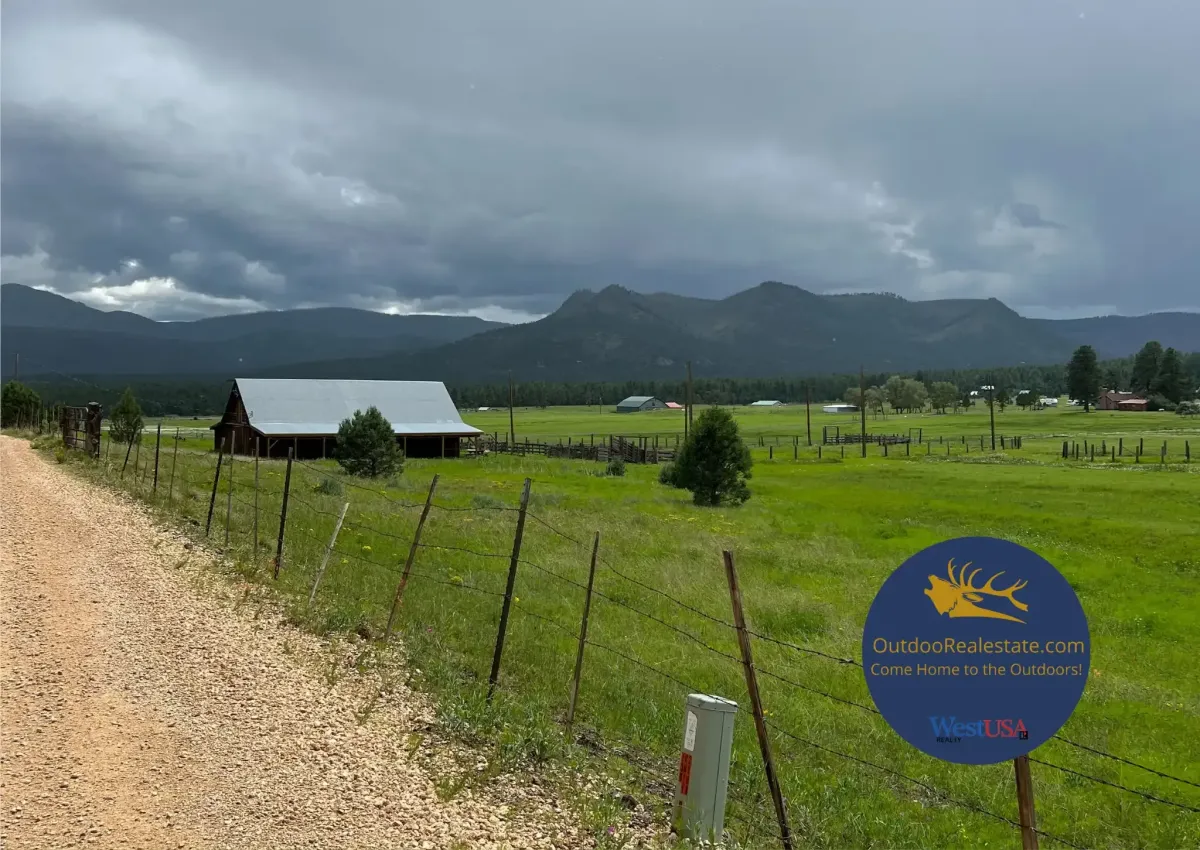
The White Mountains run the opposite way. The default is no HOA. Exceptions are planned and gated communities like Pinetop Country Club and Bison Golf Club in Show Low, and even those run modest compared to a Verrado or an Eastmark.
What that flip means:
- Road maintenance is on you, your neighbors, or the county. Plenty of rural subdivisions have private roads maintained by informal agreement or a small road association.
- Garbage is rarely curbside. You'll haul to the transfer station yourself or contract a private hauler. Pinetop-Lakeside and Show Low town limits have service; outside that, it's hit or miss.
- Snow plowing is the big one. Town limits get plowed by the town. HOA communities contract a plow. Outside both, you're on a county priority list — main routes first, your cul-de-sac maybe two days later. A lot of full-timers own a snow blade for their truck or pay a neighbor with one.
- CC&Rs still exist on plenty of non-HOA subdivisions, recorded by 1970s and '80s developers. They might restrict mobile homes, livestock, paint colors, or detached structures. Read them. Title companies will pull them if you ask.
Water, well, and septic
In Phoenix, you tap city water and sewer and that's the end of the conversation. Up here, that conversation is half the inspection.
Inside Pinetop-Lakeside, Show Low, Snowflake, and Taylor town centers, you're often on city or district water and sewer. The further from town, the less true that is. A meaningful share of mountain properties — anything on more than an acre, anything older than the 1990s, almost everything in unincorporated areas — is on a private well and septic.
"I've never seen a Phoenix buyer regret testing the well during inspection. I've seen plenty regret skipping it." — Wes
Power and utilities
Phoenix runs on APS or SRP with natural gas through Southwest Gas. Plug-and-play.
Up here, much of the White Mountains is on Navopache Electric Cooperative — a member-owned co-op headquartered in Lakeside. APS still covers parts of the high country closer to the Mogollon Rim. Co-op service is reliable, but rates and policies are different from APS. You'll pay a membership fee at hookup, and outages can take longer to restore in remote areas after a big storm.
Natural gas is mostly not available in the high country. Most homes heat with one of these:
- Propane, delivered by tank. Big tanks (500–1,000 gallon) are owned or leased. Prices fluctuate seasonally and tend to spike in fall.
- Electric resistance heat (baseboard or forced-air). Cheap to install, expensive to run through a 6-month winter at altitude.
- Heat pumps, increasingly common on new builds. Modern cold-climate heat pumps work fine down to about 5°F, which covers most White Mountains winters. Backup heat still matters for the cold weeks.
- Wood and pellet stoves, often primary or supplemental. A lot of the cabins we sell have one.
Internet
In Phoenix, fiber is widely available and gigabit is normal. Up here it's a different sport.
Pinetop-Lakeside and Show Low town centers have cable, some fiber pockets, and a few WISPs covering specific areas. Get a mile or two from town and the options thin out fast. DSL still exists in places. Cellular coverage varies.
Starlink has changed this conversation more than anything else in the last five years. For outlying properties, Starlink is the most common solution we see. Not cheap, but reliable, and it works in places where nothing else does. If you're working remote and looking outside town limits, expect Starlink to be your answer and budget for it.
Year-round access

In the Valley, year-round access is so taken for granted nobody mentions it. Up here, "year-round access" is a real listing keyword for a reason.
- Town streets in Pinetop-Lakeside, Show Low, Snowflake, Taylor, Springerville-Eagar — paved, plowed, year-round.
- County-maintained roads outside town — usually paved or chip-sealed, plowed by the county on a priority schedule. Main routes first; spurs later. You may wait a day or two after a big storm.
- Private subdivision roads — depends on the subdivision. Some are paved and plowed by a road association. Some are gravel and unmaintained in winter. Read the subdivision docs.
- Forest service roads — run through Apache-Sitgreaves National Forest and connect to plenty of inholdings. Not plowed. Not always passable. Some close seasonally.
- Driveways — even if the road is plowed, your driveway is your problem. A 200-foot uphill driveway in 18 inches of snow is a two-hour shoveling job or a $400 plow visit.
Summer-only second home, none of this matters. Full-time residence or December access for skiing at Sunrise, it matters a lot. We always recommend a winter visit before closing on a full-time property.
The cooling-heating flip
In Phoenix, you run AC eight months a year and your July electric bill is a horror movie. You barely heat in winter.
Up here, it flips. Most White Mountains homes barely run AC. Many older cabins don't have central air because they don't need it. A ceiling fan and open windows handle most summer days. New construction often has a heat pump that does both.
Phoenix Metro
8 months
AC running April through November in Phoenix
AC Season
White Mountains
~0 months
Most WM homes don't need central AC at all
What runs is the heat. Six to seven months of meaningful heating, on propane, electric, wood, or some combination. December and January bills get real, especially with electric resistance heat or a leaky envelope. Older cabins with single-pane windows eat propane.
Phoenix Metro
~2 months
Meaningful heating needed Dec–Jan only in Phoenix
Heating Season
White Mountains
6–7 months
Oct through Apr at most WM elevations
Total annual utility cost between a Phoenix home and a White Mountains home of similar size often comes out closer than you'd think. Brutal AC bill versus long heating season. The mountain often wins on total because nighttime cooling is free.
Land lot sizes
Phoenix subdivision lots run 0.10 to 0.25 acres. A quarter-acre is a respectable Valley lot. Half an acre is luxury.
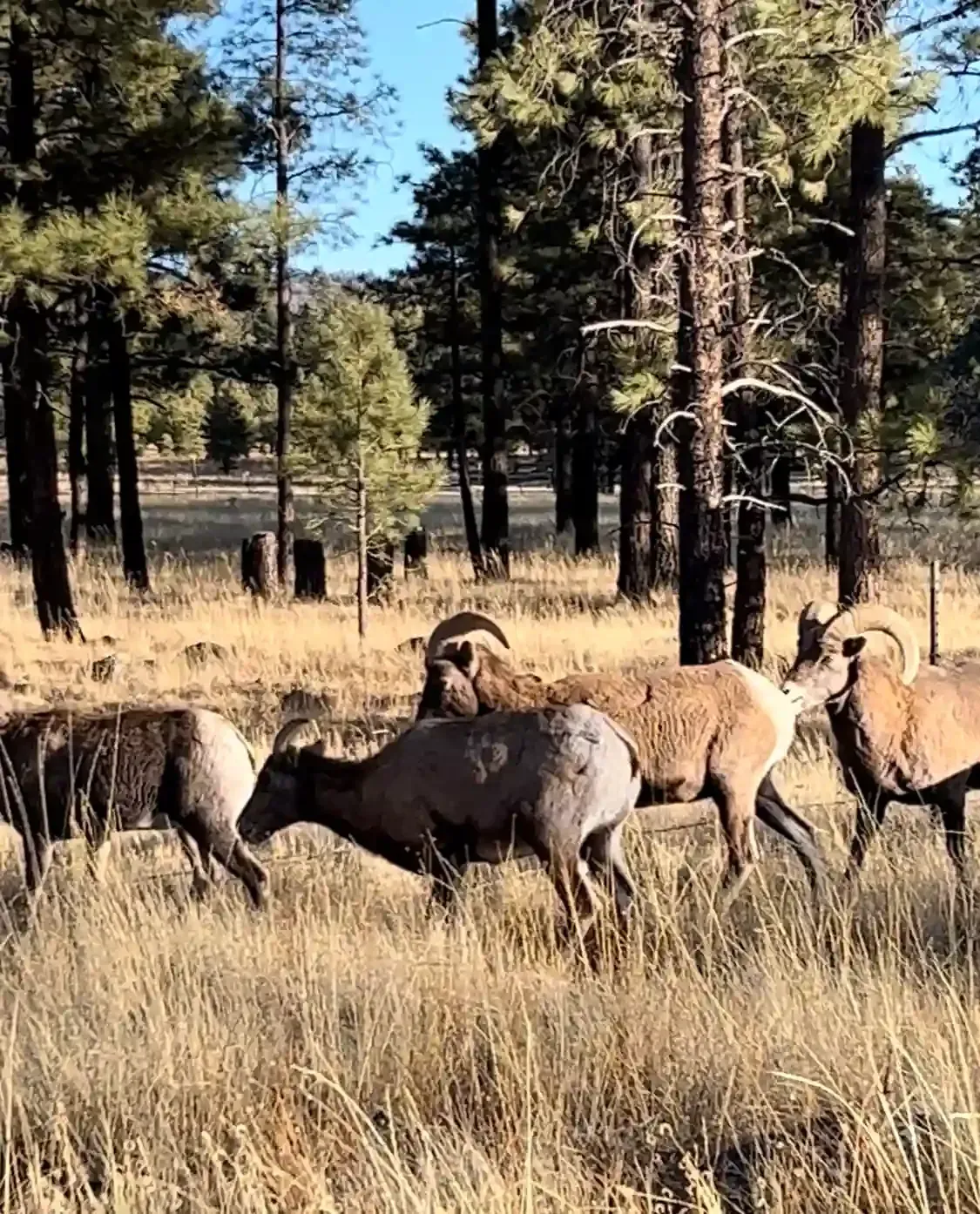
Up here, 0.25 acres is a small lot. White Mountains residential norms run 0.5 to 1 acre, and properties on 1, 2, 5 acres or more are not unusual. We've sold plenty of 10- and 20-acre parcels.
Phoenix Metro
0.10–0.25 ac
Typical Phoenix subdivision lot
Standard Lot
White Mountains
0.5–5+ acres
Common in Show Low, Pinetop, Vernon, Pinedale
- Privacy is real. Nearest neighbor a quarter-mile away through pine trees, not 12 feet through stucco.
- Landscaping is mostly natural — pines, oaks, native grasses. The work is keeping vegetation cleared for fire safety, not adding sod and palm trees.
- Maintenance scales with lot size. Five acres is a lot of land to keep Firewise-compliant. If you're not comfortable on a tractor or with a chainsaw, factor in someone who is.
- Outbuildings are common. Workshops, sheds, detached garages, RV covers. Phoenix subdivisions usually don't allow most of this.
Permit and build timelines
Maricopa permitting is online, well-staffed, and moves fast for what it is.
Up here you're working with Navajo, Apache, or Gila County depending on the property, plus the town if it's inside Pinetop-Lakeside or Show Low. Each runs its own pace, its own forms, and often a counter rather than an online portal.
- Site-built homes follow standard county codes with the usual inspection milestones.
- Manufactured homes are common up here in ways they're not in Phoenix. Older "trailer" parcels can be tricky because the home may pre-date current permitting. Newer manufactured on permanent foundations is treated similarly to site-built for most purposes, including financing.
- Permit timelines for new builds run longer than Phoenix. Plan 30 to 90 days for plan review. Custom builds with engineered alternatives can run longer.
- Owner-builder rules are different in rural Arizona. Legal, but more involved than people expect.
Inventory and market velocity
The Phoenix market is deep — thousands of listings, dozens in any submarket, comparable comps everywhere.
The White Mountains market is thin. On any given week we might have a couple hundred residential listings across Pinetop, Show Low, Heber, Overgaard, Snowflake, Taylor, Springerville-Eagar, Greer, and Alpine combined. In any specific niche — say, two-bedroom cabin under $400,000 in Pinetop with year-round access — you might have three listings, or none, or seven.
- The right property goes fast. Clean, well-priced, good location, good road access — under contract in a week. Phoenix buyers used to scrolling Zillow for months get caught flat-footed.
- The wrong property sits. Overpriced, hard to insure, well issues, access problems — months on market. The price reductions tell the story.
- Comps are sparse. A Phoenix appraiser pulls twenty similar sales in 90 days. A White Mountains appraiser may have to reach further out to find three comps. This affects appraisals and sometimes financing.
- Be ready to move. Find the right property Saturday and you may not get to "think about it for a week."
Wildfire and natural risk
Phoenix's natural risks — monsoon wind, hail, dust, flash flooding in washes, heat — are real but largely manageable with standard construction and insurance.
White Mountains' primary risk is wildfire. Wallow, Rodeo-Chediski, and the more recent Crooks and Bush fires are not abstractions. The management is real and buyers should think about it explicitly:
Property condition expectations
Phoenix tract homes are uniform. Walk into 100 of them and you've walked into the same house 100 times.
White Mountain cabins are not uniform. Built across six decades by different builders, often modified over time. A 1978 A-frame that someone added a 1995 wing to and a 2008 wraparound deck onto is its own animal. Each addition may or may not have been permitted, may or may not have been done well.
- Use a local inspector. A Phoenix inspector won't catch what a White Mountains inspector catches — ice damming, snow load issues on roofs, woodstove and chimney code, freeze-thaw foundation movement, propane line concerns.
- Plan a longer due diligence period. Phoenix's standard 10-day inspection is too short up here. Push for 14–21 days minimum to fit well testing, septic inspection, full home inspection, and any chimney or structural specialty work.
- Older cabins have character. Upside and downside both. "Character" sometimes means "DIY plumbing from 1992."
Title, easements, and access rights
Phoenix subdivisions have clean title most of the time. Standard utility easements, public-street access, boring in a good way.
White Mountains title is more interesting in ways that occasionally bite buyers:
- Forest service easements — properties bordering Apache-Sitgreaves National Forest sometimes access via forest service roads. Rights are usually solid but worth confirming.
- Road easements — many parcels access via private easements over neighboring property. Read the language. We've seen ugly disputes where one neighbor decides to fence the road.
- Water easements — shared wells, irrigation ditches, rights to a stock pond.
- Mineral rights — sometimes severed from surface rights. Rarely a practical issue but worth knowing.
- Old CC&Rs — recorded by 1970s developers, often technically still binding.
Use a title company that does mountain work regularly. Read the schedule B exceptions during due diligence. If something doesn't make sense, ask.
What stays the same
We don't want to overstate the differences. A real estate transaction up here is still a real estate transaction in Arizona.
- Fair housing law is the same. Federal and state. We follow it.
- Agency disclosure is the same. Same Arizona Department of Real Estate rules.
- The contract is the same AAR Residential Resale Purchase Contract you've signed in Phoenix.
- Financing fundamentals are mostly the same, with caveats. Manufactured homes have specific loan products. Well/septic properties require specific appraisal addenda. Some rural areas qualify for USDA rural development loans. Your Phoenix lender should be honest about whether they can handle the property.
- Closing process is the same. Title, escrow, signing.
The mechanics are the same. The variables you have to evaluate are different.
Before your first trip
- Get pre-approved with a lender who has done mountain properties. Ask about manufactured-home products, well/septic appraisal addenda, and whether they have comps for your target area. If they hesitate, find another lender.
- Pull insurance quotes on two or three sample listings before you fly up. Have your agent run them. You'll learn what you're walking into before you fall in love.
- Block at least 48 hours, ideally a long weekend. The drive matters. Trying to see eight properties in four hours and drive back Saturday night is how mistakes happen.
- Plan one winter visit before closing on a full-time property. If you can't, talk to neighbors about what the road does in February.
- Test internet from the driveway of any property where you'll work remote. A one-minute speed test is cheaper than learning at closing that "high speed available" meant Starlink-only.
- Pull the county tax history before you make an offer. Five minutes online. Tells you what you'll really pay.
- Budget extra for due diligence. Plan $1,500 to $3,000 for home, well, septic, and chimney inspections versus the Phoenix-equivalent $400 to $600 single inspection.
- Talk to us before you make an offer. If a Phoenix agent has offered to "drive up and help," ask them how many White Mountains transactions they've closed. Fewer than five and you're paying a learning curve at your expense.